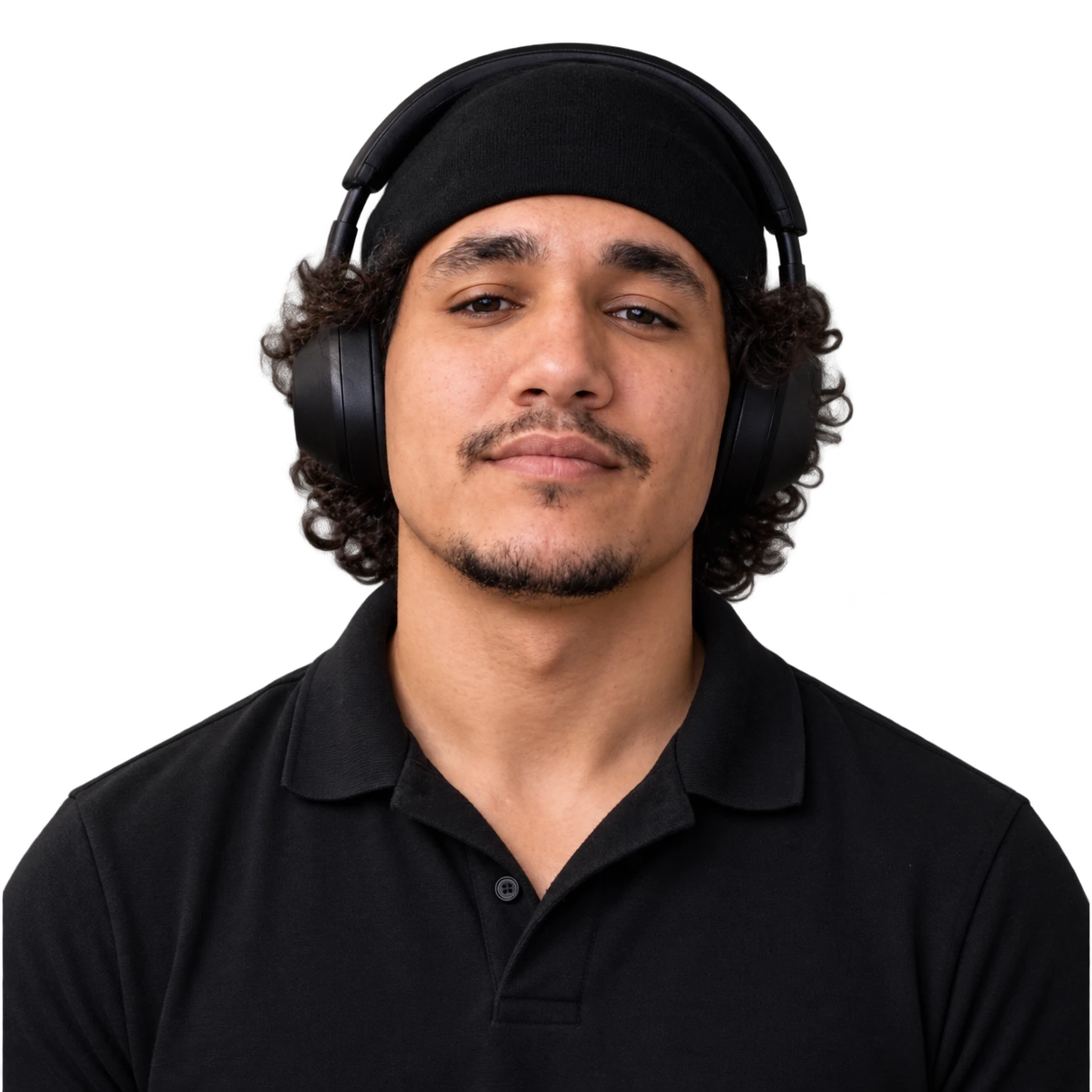
Founder’s perspective · Technology and the future
I build for the world we are moving toward.
I am afez ino, founder of CSW Global. I guide the group’s direction and work directly on its products and systems, from strategic choices to engineering decisions and implementation.
I do not believe the future of artificial intelligence will stop at conversational applications or the tools we use today. It may reshape how institutions work, how systems are protected, how people learn and how humans interact with machines.
Some of the systems we are developing are software. Other directions lead into broader engineering work. I do not see them as one product, but as fields connected by a central question: how do we build systems with greater capability and autonomy while keeping people in control?
That is the work I have chosen to pursue.
01 AI systems
Intelligence Beyond Conversation
I want intelligent assistants to move beyond answering questions. A system should understand an intended outcome, organize tasks, use services it has permission to access and carry work forward to a clear result.
At CSW Global, I have begun developing components for agents, task coordination, permissions and interaction across systems. The challenge is enabling useful work within clear boundaries of responsibility and control.
Alongside this work, I am shaping ALL TO ONE, a shared workspace for projects and workstreams, and an AI-led Investor Room for organizing project information and investment materials. Both remain concepts whose form will be established through further product work.
I do not want AI to remain just another window we open whenever we need help.
02 Cyber defense
Defense That Does Not Wait for an Attack
I think about cybersecurity in a world where attacks can become faster and more automated. Defense should be able to move earlier than the moment damage is discovered.
I am working toward a proactive direction in which intelligent systems can analyze signals, assess threats, support authorized defensive testing and help contain incidents. Any testing must take place in environments where it is explicitly permitted.
I am not looking for a promise that a system can never be breached. I want to help make threats quicker to detect, attacks harder to sustain and their effects smaller.
03 Robotics and physical systems
When Intelligence Moves Beyond the Screen
I have started exploring physical AI, robotics and autonomous systems, and what it takes to bring perception and planning into machines that operate in real environments.
That interest includes unmanned aerial systems for permitted commercial and industrial uses such as inspection, monitoring and response. These fields require specialist expertise, safety work, testing and licensing, so I approach them as continuing engineering directions whose scope must be established through that work.
04 Learning and future work
Education for a World Whose Jobs Are Still Taking Shape
I have worked on ideas around educational analysis, university choice and career pathways, including ORX Rank, an initiative to assess university readiness for learning in the AI era. My question has grown beyond choosing a university.
I want to explore tools and models that help institutions and learners prepare while AI capabilities and labor markets continue to change. The timing of more general AI is unknown; the need to think carefully about learning and work is already here.
05 A CSW Global company
ORYXA Is One of Our Paths
 ORYXA Is One of Our Paths
ORYXA is one of the major products I lead within CSW Global. We are developing a connected digital experience across services and activities, with AI systems intended to help people and institutions find information, make decisions and complete tasks.
I do not see ORYXA as the limit of what CSW Global can build. Cyber defense, robotics, education and intelligent aerial systems have distinct needs and paths. They may draw on shared experience and technology without needing to become products inside one application.
06 A two-to-ten-year horizon
The Work Ahead
I see the next two to ten years as a horizon for advancing what we have begun and extending our work into fields that need research, experiments and specialized partnerships. Priorities will follow what we learn from implementation, engineering results, available resources and the value each technology can provide.
Some of these goals are larger than what a company at our current stage can deliver today. I do not think that means we should limit the questions to the size of today’s capacity.
The work we do today should bring us closer to answering bigger questions.